

A child’s first experience of the dentist shapes how they feel about dental care for the rest of their life. At Aligning Dentistry, Alwarpet, our approach to kids dentistry in Chennai is built around making that experience calm, positive, and genuinely useful — addressing real dental needs while building the trust and familiarity that turns anxious young patients into confident ones.
Kids dentistry — also called paediatric dentistry — covers the full range of dental care for children from infancy through adolescence. It addresses the specific dental needs that arise as baby teeth emerge, develop, and are eventually replaced by permanent teeth — a process that spans roughly the first fifteen years of life and requires ongoing attention at each stage.
Children’s teeth are not simply smaller versions of adult teeth. Baby teeth serve critical functions — maintaining space for permanent teeth, supporting speech development, and enabling proper chewing — and problems that develop in childhood often have consequences that extend into adult dental health if not identified and managed early.
At Aligning Dentistry, kids dental care focuses first on prevention — fluoride application, fissure sealants, dietary guidance, and early habit correction — alongside treatment of decay, gum issues, and developmental concerns when they arise. The approach is always age-appropriate, paced to the child’s comfort level, and conducted with parents fully informed and involved.
A first dental visit is ideally scheduled around the time the first baby tooth appears — or by the child’s first birthday at the latest. Early visits establish familiarity with the dental environment before any treatment is needed, which is the single most effective way to prevent dental anxiety from developing.
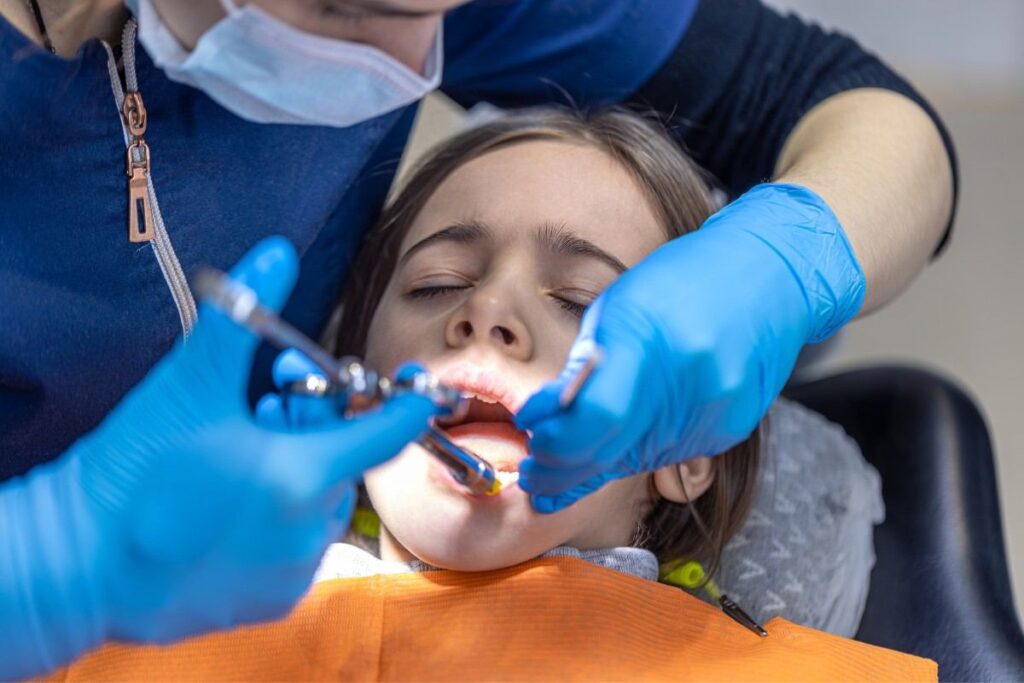
Your Child Has Never Visited a Dentist If your child has not yet seen a dentist — regardless of whether they have visible dental problems — an initial visit should be scheduled promptly. Early visits are about prevention and familiarity, not just treatment.
Visible Cavities or Dark Spots on Baby Teeth Discolouration, holes, or dark patches on baby teeth indicate decay that requires treatment. Baby teeth with untreated cavities can become painful, affect the permanent tooth developing beneath them, and cause premature tooth loss that disrupts spacing.
Complaints of Tooth Pain or Sensitivity Any toothache or sensitivity in a child should be assessed promptly. Children often under-report dental pain or adapt to it — parental vigilance and regular dental visits are the most reliable way to catch problems early.
Prolonged Thumb Sucking or Dummy Use Thumb sucking or prolonged dummy use beyond the age of three can alter the development of the jaw and teeth — affecting bite and the position of emerging permanent teeth. Early assessment allows guidance on whether intervention is needed.
Teeth Coming in Crooked or in Unusual Positions When permanent teeth erupt in positions that appear significantly out of alignment, an early orthodontic assessment — typically from around age seven — can identify whether early intervention will simplify or reduce later treatment needs.
Bleeding or Swollen Gums in a Child Gum bleeding in children is not normal and should not be assumed to resolve on its own. It typically indicates the need for improved oral hygiene guidance and a professional clean — and in some cases may signal more specific gum concerns.
A Baby Tooth Lost Too Early Due to Decay or Injury When a baby tooth is lost significantly earlier than expected, a space maintainer may be needed to hold the gap open for the permanent tooth. Without it, adjacent teeth can drift and create problems for the emerging permanent dentition.
Prevents Problems Before They Require Treatment The most valuable outcome of regular paediatric dental visits is what doesn’t happen — the cavity that is prevented by fluoride application and dietary guidance, the spacing problem identified before it becomes orthodontic complexity, the decay caught before it reaches the nerve. Prevention is always simpler than treatment.
Builds a Positive Relationship with Dental Care for Life Children who have calm, positive early dental experiences carry that association into adulthood. The reverse is equally true — a difficult early experience can create dental anxiety that affects how a person manages their oral health for decades. The investment in a gentle, child-appropriate approach pays long-term dividends.
Protects Permanent Teeth Before They Erupt Dental problems in childhood — untreated decay, premature tooth loss, bite issues, and thumb sucking habits — directly affect the development of the permanent dentition. Addressing these early protects outcomes that cannot be easily corrected once permanent teeth are fully established.
Gives Parents Practical, Personalised Guidance A children’s dental visit at Aligning Dentistry always includes guidance for parents — on brushing technique, the right age for fluoride toothpaste, diet and sugar management, and what to watch for between visits. Informed parents are the most important factor in a child’s dental health.
Catches Developmental Issues at the Optimal Time Orthodontic and jaw developmental concerns are often most efficiently managed when identified early. Regular dental visits create the opportunity to monitor development and recommend timely assessment — rather than presenting a complex orthodontic problem once all permanent teeth have erupted.
First Visit and Introduction to the Dental Environment The first appointment for a young or anxious child focuses on familiarisation before any clinical procedure. The child is introduced to the chair, the light, and the instruments at their own pace. No treatment is forced — the goal is a positive first impression that makes every subsequent visit easier.
Clinical Assessment of Teeth, Gums, and Development Once the child is comfortable, a full assessment of the baby and permanent teeth is carried out — checking for decay, gum health, bite development, eruption sequence, and the presence of any habits (thumb sucking, mouth breathing) that may be influencing jaw development.
Preventive Treatment and Parent Guidance Preventive treatments — fluoride application, fissure sealants on newly erupted permanent molars, and professional cleaning — are provided where appropriate. Parents receive specific guidance on home care, diet, and the next developmental milestones to watch for.
Treatment of Decay or Other Dental Issues If cavities or other dental problems are identified, treatment is planned and explained to both parent and child at an age-appropriate level. For anxious children or more involved procedures, behaviour management techniques and, where necessary, sedation options are discussed with parents before proceeding.
Recall Schedule and Ongoing Monitoring A recall interval appropriate to the child’s dental health is recommended — typically every six months. Regular visits allow continuous monitoring of dental development, early detection of emerging problems, and consistent reinforcement of positive dental habits.
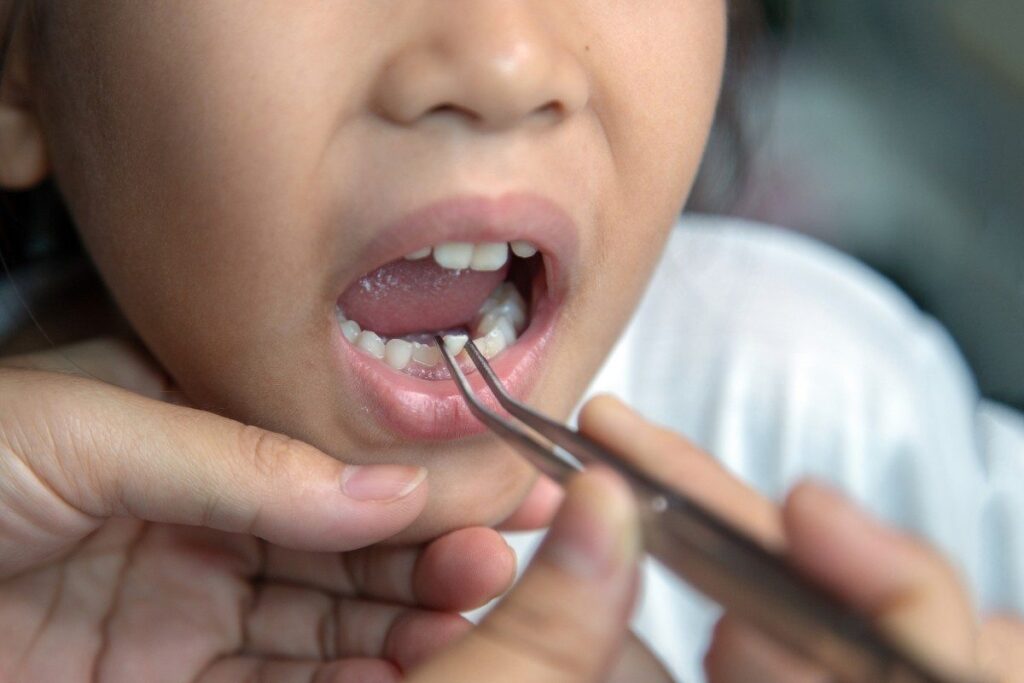
Specialist Care — Not Just a General Appointment for a Smaller Patient Children’s dental needs require specific knowledge of dental development, age-appropriate behaviour management, and an approach calibrated to a child’s cognitive and emotional stage. At Aligning Dentistry, paediatric dental care is delivered with specialist-level understanding of these factors — not as a routine adult appointment adapted for a younger patient.
Preventive First — Treatment Only When Necessary Our approach to kids dentistry in Chennai prioritises prevention at every visit. Fluoride application, fissure sealants, dietary guidance, and oral hygiene instruction form the core of every paediatric appointment — because preventing a cavity is always better than treating one.
Patience as a Clinical Skill Managing a young, anxious, or uncooperative child requires patience, technique, and genuine child-centred communication. Our team has extensive experience with children across a wide range of ages and anxiety levels — adapting the pace and approach to what each individual child needs.
Parents Involved and Informed at Every Stage We treat the parent as an essential part of every paediatric appointment. What is found, what is recommended, and what to do at home is communicated clearly — because parental understanding and engagement directly determines how well dental health is maintained between visits.
Early Orthodontic Awareness With access to orthodontic specialists within the same clinic, developmental concerns identified at a paediatric dental visit can be referred promptly for assessment — avoiding the delays that result when specialties are disconnected.
Located in Alwarpet, Serving South Chennai Families Conveniently accessible for families from Alwarpet, Mylapore, T. Nagar, Adyar, and Nungambakkam — with a clinical standard and patient experience appropriate for the families who entrust us with their children’s care.
Children’s dental care at Aligning Dentistry is led by specialist with postgraduate training and extensive clinical experience in paediatric dentistry, preventive dental care for children, and behaviour management techniques for young and anxious patients.
The cost of kids dental treatment in Chennai varies depending on the child’s age, the number and type of treatments required, and whether preventive or restorative care is needed.
Children who require conscious sedation for treatment due to significant anxiety or procedure complexity involve additional clinical planning and cost.
Treatment needs and complexity differ significantly between a three-year-old with baby teeth and a twelve-year-old with a mixed or permanent dentition.
If developmental or bite concerns identified during a paediatric visit require a separate orthodontic consultation, this is costed as a distinct appointment.
A clear cost estimate for your child’s dental care in Chennai is provided at the first consultation — once your specialist has assessed your child’s teeth and confirmed what treatment or prevention is needed.
For parents, finding a dentist their child actually feels comfortable with is as important as the clinical quality of the care. Here is what some of our patients' families have shared.
Ideally, a child’s first dental visit should take place around the time their first baby tooth appears — typically between six and twelve months of age — or by their first birthday at the latest. Early visits are about familiarisation and preventive guidance rather than treatment.
Talk about the visit positively and matter-of-factly in the days beforehand — without building anxiety by overemphasising what will happen. Avoid using words like “pain,” “injection,” or “drill.” Let the clinic team take the lead on explaining things to your child in an age-appropriate way once you arrive.
Yes. Baby teeth hold space for permanent teeth, support speech and chewing development, and influence the position and health of the permanent teeth developing beneath them. Untreated decay in baby teeth can affect the permanent tooth underneath and cause premature tooth loss that disrupts future alignment.
A fissure sealant is a thin protective coating applied to the deep grooves of newly erupted permanent molar teeth — where decay most commonly begins. It is a painless preventive procedure that significantly reduces the risk of cavities forming in those vulnerable areas. Most children benefit from sealants on their permanent molars.
Most children benefit from a dental visit every six months. Children with active decay, higher cavity risk, or orthodontic concerns may be advised to attend more frequently. Your specialist will recommend the appropriate recall interval based on your child’s dental health.
Yes. Professionally applied fluoride treatments are safe, evidence-based, and recommended by dental health authorities for children at risk of decay. The amount of fluoride used in clinical application is carefully controlled and appropriate for the child’s age and weight.
If a baby tooth is knocked out, do not attempt to replant it — replanting baby teeth is not recommended as it can damage the permanent tooth developing underneath. Contact us promptly so we can assess whether any injury to the gum, bone, or underlying permanent tooth requires attention.
A knocked-out permanent tooth is a dental emergency. Keep the tooth moist — in milk or the child’s saliva — and contact us immediately. Reimplantation is possible if carried out quickly and correctly. Do not scrub or rinse the tooth root.
A preliminary orthodontic assessment is often recommended around age seven — when enough permanent teeth have erupted to give a clear picture of how the bite and jaw are developing. Early assessment does not always mean early treatment, but it identifies cases where timely intervention can simplify future orthodontic needs.
Yes, when performed by a qualified periodontist. Gum surgery is a well-established clinical procedure with a long safety record. Pre-surgical assessment and post-operative care protocols minimise risk significantly.
Limit sugary foods and drinks — particularly between meals and before bedtime. Supervise brushing twice daily with an age-appropriate fluoride toothpaste. Begin flossing when teeth are in contact with each other. Attend professional dental visits every six months. Your specialist will provide personalised guidance based on your child’s cavity risk at each visit.
The dental habits and experiences formed in childhood last a lifetime — and it is never too early to start them well.
At Aligning Dentistry, Alwarpet, our specialists provide kids dental care in Chennai with the patience, clinical expertise, and child-focused approach that makes every visit a positive one. Book your child’s appointment and give their dental health the start it deserves.
Schedule your consultation with an MDS specialist today.
Prefer to message first? Reach us on WhatsApp for a quick, no-pressure conversation.
Speak directly with our team to ask questions or confirm availability.