

Root canal treatment has an undeserved reputation. For most patients at Aligning Dentistry, it’s the treatment that ends the pain — not causes it. When a tooth’s inner pulp becomes infected or inflamed, root canal treatment in Chennai removes the source of infection, saves the natural tooth, and allows you to keep it functioning for years to come. Our experts use advanced techniques and technology to make the experience as comfortable as clinically possible.
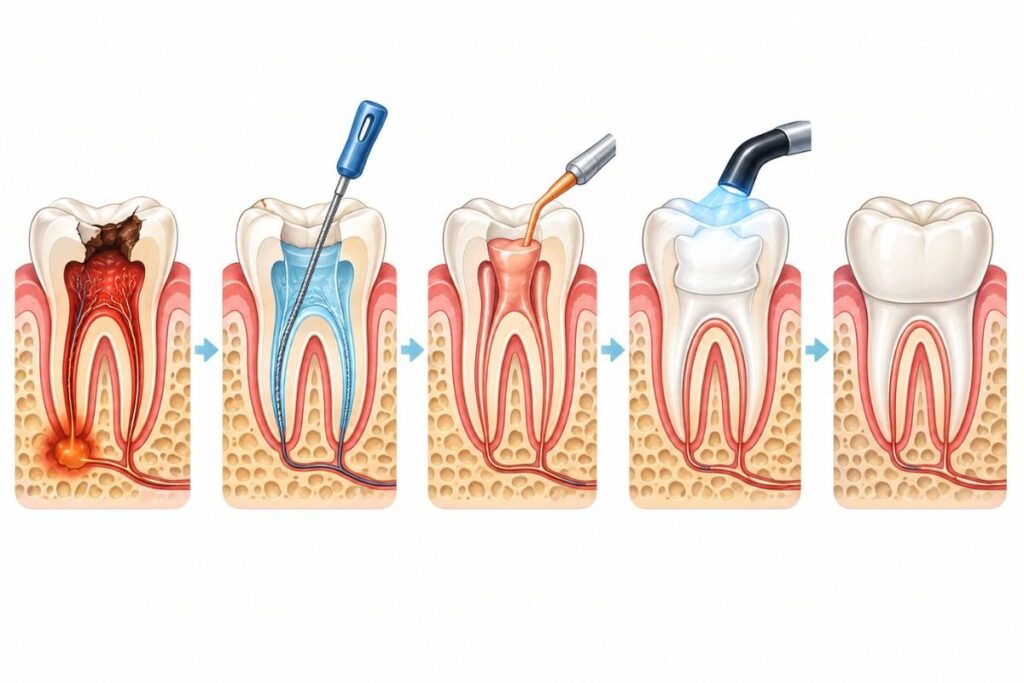
Root canal treatment, clinically known as endodontic treatment, is a procedure that removes infected, inflamed, or dead tissue from inside a tooth — specifically from the pulp chamber and root canals. Once the infected tissue is removed and the canals are cleaned and shaped, they are filled and sealed to prevent reinfection.
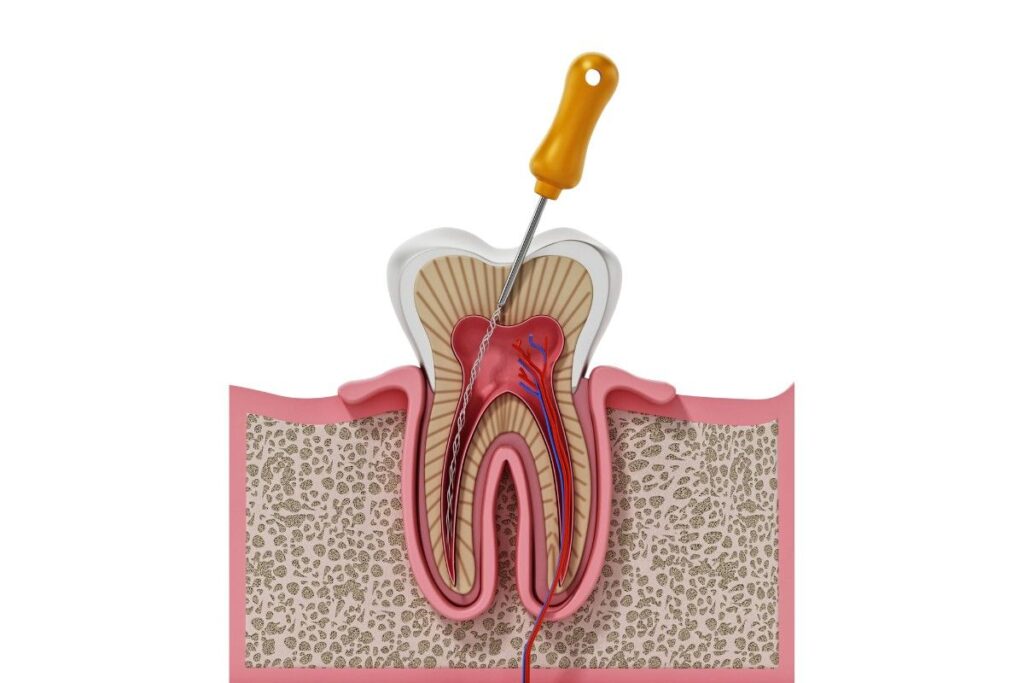
The pulp is the soft tissue inside the tooth containing nerves and blood vessels. When bacteria penetrate the pulp — through deep decay, a crack, or trauma — infection develops. Without treatment, this infection can spread to the surrounding bone and cause an abscess, pain, and ultimately tooth loss.
Root canal treatment preserves the natural tooth. The treated tooth is typically restored with a crown afterward to protect it from fracture and restore full function.
At Aligning Dentistry, root canal treatment is carried out by a specialist in the diagnosis and treatment of dental pulp and root conditions — using rotary instrumentation and digital imaging for precision at every stage.
Severe, Persistent Toothache A deep, throbbing ache that lingers — especially one that worsens when lying down or intensifies spontaneously — is one of the most consistent indicators of pulp infection or inflammation.
You’re Wearing a Removable Denture That Feels Unstable Dentures that slip, click, or require adhesive to stay in place are a common reason patients consider implants. Implant-supported restorations are fixed, stable, and dramatically more comfortable for daily function.
Swelling in the Gum Near a Tooth A raised, tender swelling or pimple-like bump on the gum close to a tooth can indicate an abscess — a pocket of infection at the root tip that requires immediate clinical attention.
A Dental X-Ray Shows a Shadow at the Root Sometimes there are no pain symptoms, but a routine X-ray reveals a dark shadow at the root tip — indicating bone changes associated with infection. This is a common incidental finding that requires treatment.
Pain When Biting or Applying Pressure Discomfort specifically when chewing or biting down on a particular tooth can indicate infection at the root tip, where the tooth meets the supporting bone.
A Tooth That Was Previously Traumatised Teeth that have been knocked, cracked, or injured — even years earlier — can develop pulp complications later. If you have a history of dental trauma and notice new symptoms, an assessment is warranted.
A Bridge Was Recommended but You Want to Preserve Adjacent Teeth A traditional bridge requires grinding down healthy neighbouring teeth. Implants replace the missing tooth independently — leaving surrounding teeth completely intact.
Saves Your Natural Tooth The primary goal of root canal treatment is tooth preservation. Keeping your natural tooth avoids the need for implants, bridges, or dentures — and maintains the natural structure of your jaw and bite.
Ends the Pain — It Doesn’t Cause It The discomfort associated with root canal treatment comes from the infection itself, not the procedure. Carried out under effective local anaesthesia, the treatment relieves pain rather than creating it. Most patients are surprised by how comfortable the experience actually is.
Prevents the Spread of Infection Left untreated, a dental abscess can spread to adjacent teeth, the jawbone, and in severe cases, to other areas of the body. Root canal treatment eliminates the infection source and stops its progression.
A Treated Tooth Can Last a Lifetime With appropriate restoration and proper oral care, a root-canal-treated tooth can function for many years — often matching the lifespan of natural, untreated teeth.
Restores Normal Eating and Function Once treatment is complete and the tooth is restored with a crown, you can chew normally, without pain or limitation — on both sides of your mouth.
Consultation and Symptom Assessment Your specialist reviews your symptoms, dental history, and takes a clinical look at the tooth in question. This appointment establishes the likely diagnosis and whether root canal treatment is indicated.
Digital X-Ray and Pulp Assessment A dental X-ray — and in some cases a 3D CBCT scan — is taken to assess the root anatomy, degree of infection, and condition of the surrounding bone. The number of root canals and their curvature are mapped before treatment begins.
Treatment Planning Your endodontist confirms the diagnosis, explains the procedure clearly, and outlines whether treatment will be completed in one visit or across two — depending on the complexity of the infection and root anatomy.
Root Canal Procedure The tooth is anaesthetised thoroughly. Your endodontist removes the infected pulp tissue, cleans and shapes the root canals using precision rotary instruments, and disinfects the space. The canals are then filled with a biocompatible material and sealed. A temporary or permanent filling is placed.
Crown Placement and Follow-Up Following root canal treatment, the tooth is typically restored with a dental crown to protect it from fracture and restore full function. A follow-up appointment confirms healing and checks the surrounding bone is recovering as expected.
MDS Endodontist — Specialist in Root Canal Care Root canal treatment at our clinic is performed by a specialist whose postgraduate training is focused specifically on the diagnosis and treatment of dental pulp conditions. This level of expertise significantly influences both treatment success and patient comfort.
Advanced Rotary Endodontic Instruments We use motorised rotary files to clean and shape root canals — a significant advancement over manual instrumentation that improves precision, reduces treatment time, and minimises procedural discomfort.
Digital Imaging for Root Analysis Dental X-rays and 3D imaging allow our specialist to map complex root canal anatomy before treatment — identifying curved, narrow, or additional canals that could be missed without proper imaging.
Single-Visit Treatment Where Clinically Appropriate In suitable cases, root canal treatment can be completed in a single appointment — reducing the number of clinic visits and allowing restoration to proceed sooner.
Coordinated Restorative Care Crown placement after root canal treatment is coordinated within the same clinic — ensuring the restoration is completed without gaps in your care or unnecessary delays.
Our experts understand that most patients arrive with anxiety about root canal treatment. A significant part of the consultation is spent addressing those concerns directly — explaining the procedure clearly, confirming effective anaesthesia, and ensuring the patient is genuinely comfortable before treatment begins.
Root canal treatment cost in Chennai is not a single fixed number — it varies based on several clinical factors that are only identifiable after a proper assessment.
Front teeth typically have fewer root canals than back molars, making treatment less complex. Molar root canal treatment generally costs more than treatment on a front tooth.
Some teeth have one canal, others have three or four. More canals mean greater complexity and longer treatment time.
Severely curved or calcified canals require more specialist time and instrumentation than straightforward anatomy.
The cost of the post-treatment crown is separate from the root canal itself and depends on the crown material selected.
A clear, itemised cost estimate for root canal treatment in Chennai is provided at your consultation — after the tooth has been properly assessed and X-rayed.
For most patients, fear of the procedure was far worse than the procedure itself. Here's what some of them shared:
Root canal treatment itself is not painful — it is performed under local anaesthesia, and the tooth is completely numbed before any procedure begins. The pain patients associate with root canal is typically the infection that made treatment necessary. Most patients find the procedure far more comfortable than anticipated.
Many cases can be completed in a single visit. More complex cases — particularly those with severe infection or multiple canals — may require two appointments. Your specialist will advise on the expected number of visits after assessing your tooth.
Without treatment, the infection inside the tooth continues to spread — potentially causing an abscess, bone loss, and ultimately tooth loss. In some cases, untreated dental infections can spread beyond the mouth. Root canal treatment is the only way to save an infected tooth.
A single root canal appointment typically takes between 60–90 minutes, depending on the tooth and complexity. Your specialist will give you a realistic time estimate before the appointment.
In most cases, yes — particularly for back teeth that bear significant chewing forces. A crown protects the treated tooth from fracture and restores its full function. Your specialist will advise whether a crown is necessary for your specific tooth.
Root canal treatment cost in Chennai varies by tooth type, number of canals, complexity of infection, and number of visits required. A transparent cost estimate is provided after your clinical assessment and X-ray at our clinic.
Yes. Root canal treatment is one of the most commonly performed and well-established procedures in dentistry. It is performed under local anaesthesia and carries a high clinical success rate when carried out by a trained specialist.
In rare cases, a previously treated tooth can develop reinfection — due to complex canal anatomy, a missed canal, or a leaking restoration. This may be treatable through retreatment. Proper crown restoration and good oral hygiene significantly reduce this risk.
Soft foods are recommended for the first 24–48 hours after treatment. Avoid chewing on the treated tooth until it has been restored with a permanent crown. Your specialist will provide specific aftercare guidance.
With proper crown restoration and consistent oral hygiene, a root canal treated tooth can last many years — often as long as a natural, untreated tooth. Regular dental check-ups help monitor its condition over time.
A root canal saves the natural tooth by removing the infection from inside it. An extraction removes the tooth entirely. Wherever clinically possible, saving the natural tooth through root canal treatment is preferred — as extraction leads to bone loss and may require replacement with an implant or bridge.
Tooth pain doesn’t resolve on its own — and the longer an infection is left, the fewer options remain.
At Aligning Dentistry, Alwarpet, our MDS endodontists provide root canal treatment in Chennai that is precise, comfortable, and focused on saving your natural tooth. Come in — and let’s end the pain properly.
Schedule your consultation with an MDS specialist today.
Prefer to message first? Reach us on WhatsApp for a quick, no-pressure conversation.
Speak directly with our team to ask questions or confirm availability.