
Dental lasers allow a range of soft tissue and hard tissue treatments to be carried out with a level of precision and control that conventional instruments cannot match. Laser dentistry in Chennai at Aligning Dentistry, Alwarpet is used where it offers a genuine clinical advantage — less bleeding, reduced healing time, and a more comfortable experience for the patient. It is not applied as a novelty, but as a tool that improves specific outcomes when used correctly.
Laser dentistry uses concentrated beams of light energy to perform dental procedures on soft tissue (gum tissue) and, in some applications, hard tissue (tooth structure and bone). Different wavelengths of laser light interact differently with tissue — allowing precise cutting, reshaping, decontamination, and treatment with minimal impact on the surrounding area.
In a clinical setting, lasers are used for gum reshaping, treatment of gum disease, removal of soft tissue lesions, management of ulcers, frenectomies, and as an adjunct to scaling and root planing in periodontal treatment. They are also used in teeth whitening activation and in some cavity preparation applications.
The key advantage over conventional instruments is precision — a laser affects only the targeted tissue, leaving surrounding healthy tissue undisturbed. This translates to less bleeding, reduced post-procedure swelling, and in many cases a faster recovery. For anxious patients, the absence of drilling sounds and reduced need for sutures can also make the experience considerably less stressful.
At Aligning Dentistry, laser dentistry is used where it delivers a measurable benefit — incorporated into treatment planning on clinical grounds, not offered as a premium add-on for its own sake.
Gum Disease That Has Not Responded to Conventional Cleaning Alone When scaling and root planing has not fully resolved periodontal pockets, laser-assisted decontamination of the pocket lining can improve outcomes — removing infected tissue and bacterial biofilm with a precision that hand instruments cannot fully achieve.
Gum Disease That Has Not Responded to Conventional Cleaning Alone When scaling and root planing has not fully resolved periodontal pockets, laser-assisted decontamination of the pocket lining can improve outcomes — removing infected tissue and bacterial biofilm with a precision that hand instruments cannot fully achieve.
Soft Tissue Lesions, Ulcers, or Growths Recurrent mouth ulcers, fibromas, or benign soft tissue growths that cause discomfort or concern can be treated with laser excision — a procedure that is typically more comfortable and heals more quickly than traditional surgical removal.
A Frenulum That Is Restricting Movement A tight labial or lingual frenulum — the small band of tissue connecting the lip or tongue to the gum — can restrict lip movement or tongue function. Laser frenectomy releases the restriction with minimal bleeding and without sutures in most cases.
Sensitivity to the Sound or Sensation of Conventional Drilling For patients with significant dental anxiety, certain laser procedures reduce or eliminate the need for rotary instruments — offering a quieter, less tactile experience that many anxious patients find considerably more manageable.
Preparation for Crown Lengthening or Restorative Work When insufficient tooth structure is visible above the gum line for a crown or filling to be placed, laser gum contouring can expose more of the tooth surface without the need for conventional surgical cutting in many cases.
Recurring Gum Inflammation Around Implants Peri-implantitis — inflammation of the tissue and bone around a dental implant — can be treated with laser decontamination as part of a broader management protocol, addressing the bacterial load in the implant pocket more effectively than conventional instruments alone.
Minimally Invasive with Less Impact on Surrounding Tissue Lasers target only the specific tissue being treated — leaving adjacent healthy tissue undisturbed. This precision reduces the collateral disruption that is unavoidable with conventional cutting instruments, and is one of the primary clinical arguments for laser use in appropriate cases.
Less Bleeding During and After Treatment Laser energy simultaneously cuts and coagulates tissue — meaning blood vessels are sealed as the procedure progresses. For patients on blood-thinning medication or those undergoing gum treatment, this is a clinically meaningful advantage.
Faster Healing for Many Soft Tissue Procedures Because laser procedures cause less thermal and mechanical trauma to surrounding tissue, healing is typically faster than after conventional soft tissue surgery. Swelling and post-procedure discomfort are often reduced.
Reduced or Eliminated Need for Sutures in Many Cases Laser soft tissue procedures frequently do not require sutures — because the coagulation effect seals the treated area. This simplifies recovery and removes the need for a suture removal appointment.
A More Comfortable Experience for Anxious Patients The absence of drilling sounds, reduced vibration, and in some procedures the reduced need for local anaesthesia make laser treatment noticeably different in character from conventional procedures — a meaningful benefit for patients who experience significant dental anxiety.
Effective Bacterial Decontamination The thermal energy of dental lasers has a demonstrated antibacterial effect on targeted tissue — making them a useful adjunct in periodontal treatment and implant maintenance, where bacterial load in pockets is the core clinical problem.
Consultation and Clinical Assessment Your specialist assesses the specific area or condition requiring treatment and determines whether laser dentistry is the most appropriate modality — or whether it would be used alongside conventional treatment. Not every procedure benefits from laser use, and the recommendation is always made on clinical grounds.
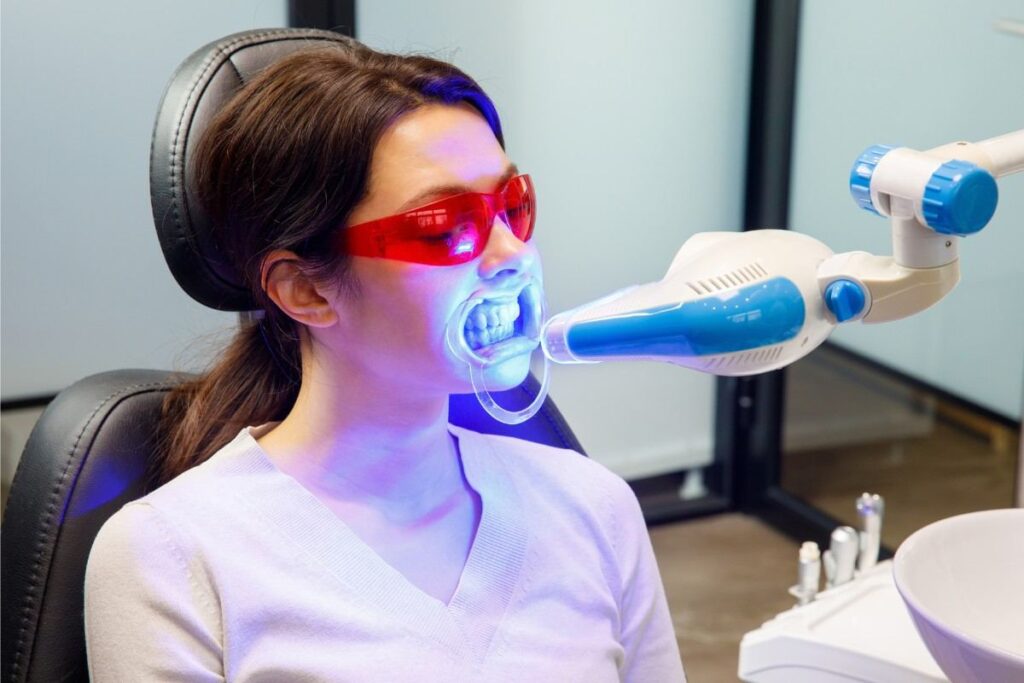
Treatment Planning and Explanation The planned procedure is explained clearly — including what the laser will be used for, what you will feel, how long the procedure will take, and what to expect during healing. Protective eyewear for both patient and clinician is always used during laser procedures.
Anaesthesia and Preparation Where Required Depending on the procedure, local anaesthesia may or may not be necessary. For gum reshaping and many soft tissue procedures, anaesthesia requirements are minimal. For more involved treatment, appropriate anaesthesia is administered before the laser is used.
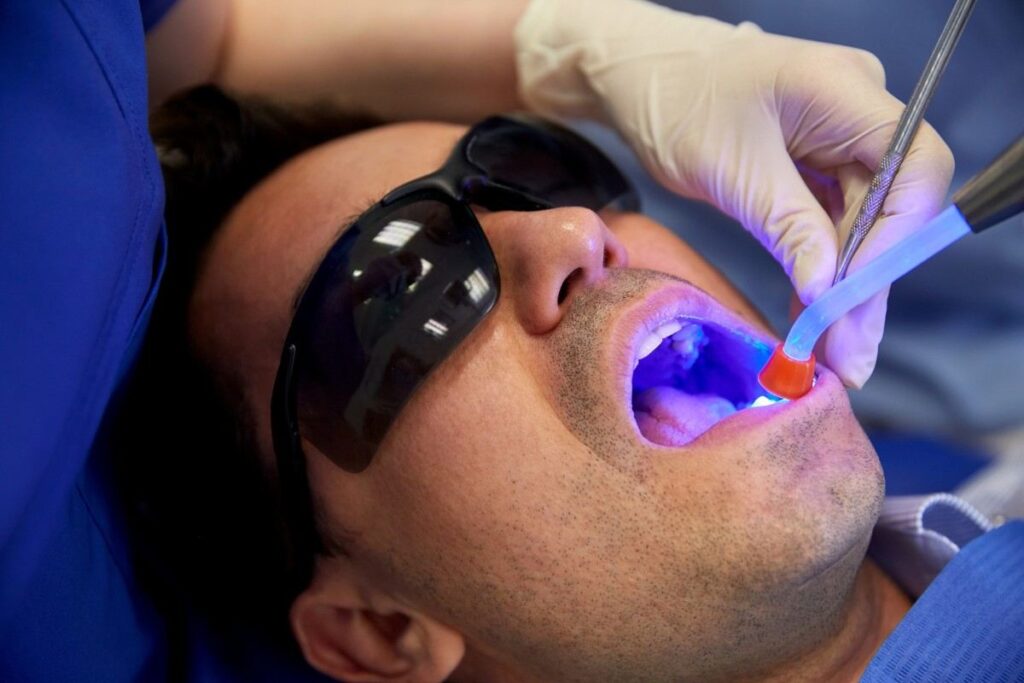
Laser Procedure The laser handpiece is applied with precision to the targeted tissue — whether reshaping gum contour, decontaminating a periodontal pocket, treating a lesion, or performing a frenectomy. The procedure is typically quieter and quicker than patients anticipate.
Post-Procedure Care and Follow-Up Aftercare instructions are provided based on the specific procedure performed. Many laser soft tissue procedures heal within days with minimal restriction. A follow-up appointment is scheduled where clinically indicated to confirm healing and assess the outcome.
Laser Used as a Clinical Tool — Not a Marketing Feature At Aligning Dentistry, laser dentistry is incorporated where it delivers a genuine clinical advantage for the specific patient and procedure. It is never recommended simply because it carries a premium perception — only where the evidence and clinical situation support it.
MDS Specialist Training and Laser Proficiency Laser dentistry requires specific training and hands-on proficiency. Our specialists are trained in appropriate laser use across the procedures where it is clinically indicated — ensuring the technology is applied with the precision it demands.
Integrated with Broader Periodontal and Restorative Care Laser treatment at our clinic is rarely a standalone procedure. It is integrated into broader periodontal therapy, gum contouring for restorative work, or smile makeover planning — coordinated as part of a comprehensive treatment approach.
Appropriate for Anxious Patients We consider patient anxiety as a genuine clinical factor. For patients who experience significant apprehension about dental treatment, laser procedures — where appropriate — can meaningfully reduce the stress of the experience, and we factor this into treatment planning.
Premium Technology Maintained to Clinical Standards The dental laser systems used at Aligning Dentistry are maintained and operated to clinical standards — not legacy equipment used selectively. Technology is only as useful as the care taken in its application.
Laser dental treatment at Aligning Dentistry is performed by specialists with postgraduate training and clinical experience in laser-assisted periodontal therapy, soft tissue procedures, and minimally invasive dental treatment.
Laser dental treatment cost in Chennai varies depending on the procedure being performed, the area being treated, and whether laser is used as a standalone modality or alongside conventional treatment.
Laser gum reshaping, frenectomy, periodontal decontamination, and lesion removal each involve different clinical time and complexity, reflected in the cost.
Treating a single localised area costs less than laser-assisted periodontal treatment across multiple quadrants.
Procedures requiring local anaesthesia involve additional clinical preparation.
When laser is used as one component within periodontal therapy or restorative treatment, costs are discussed as part of the overall plan.
A clear cost estimate for laser dentistry in Chennai is provided at your consultation — once your specialist has assessed what the procedure involves and whether laser is the most appropriate approach for your situation.
Patients who have experienced laser dental treatment consistently describe it as meaningfully different from what they expected — quieter, more comfortable, and with noticeably faster recovery.
Most laser dental procedures involve minimal discomfort — particularly soft tissue treatments such as gum reshaping, frenectomy, and lesion removal. Some procedures require local anaesthesia, while others can be performed without it. Post-procedure discomfort is typically less than with conventional surgery due to the precision of the laser and its coagulating effect on tissue.
Laser dentistry is used for a range of soft and hard tissue procedures including gum reshaping, treatment of gum disease, frenectomy, removal of soft tissue lesions and ulcers, decontamination of periodontal pockets, and as an adjunct in implant maintenance. At Aligning Dentistry, it is used where it offers a clinical advantage over conventional methods.
Yes — dental lasers are established, clinically validated tools used in dentistry worldwide. When operated by a trained specialist using the correct wavelength and settings for the specific procedure, laser dentistry is safe and effective. Protective eyewear for both patient and clinician is always used during laser procedures.
Treatment time varies by procedure. Many laser soft tissue treatments — such as frenectomy or localised gum contouring — are completed in 15 to 30 minutes. Laser-assisted periodontal treatment across multiple quadrants takes longer and may be staged across appointments.
Soft tissue healing following laser procedures is typically faster than after conventional surgery. Minor gum contouring or frenectomy sites often show significant healing within 3 to 7 days. Your specialist will give you a realistic healing expectation based on the specific procedure performed.
This depends on the procedure. Many laser soft tissue procedures can be performed with topical anaesthesia only, or with minimal local anaesthesia. More involved procedures — such as deeper periodontal treatment — require appropriate local anaesthesia. Your specialist will explain what is needed before beginning.
Laser-assisted periodontal treatment is an effective adjunct to conventional scaling and root planing — particularly for decontaminating deep periodontal pockets and removing infected pocket lining tissue. It is not a standalone replacement for comprehensive periodontal therapy, but improves outcomes when used appropriately alongside it.
Yes — laser dentistry is well-tolerated by many younger patients, particularly because the quieter, less invasive nature of the procedure reduces anxiety. Frenectomy (tongue-tie or lip-tie release) is one of the most common laser procedures performed in paediatric dentistry.
In many laser soft tissue procedures, sutures are not required — the laser’s coagulating effect seals the treated area. Whether sutures are needed depends on the extent of the procedure. Your specialist will advise you before the treatment begins.
The key differences are precision, the coagulating effect on soft tissue, reduced bleeding, and in many cases a more comfortable and quieter patient experience. Conventional instruments remain appropriate for many procedures — laser dentistry is used where it specifically improves the clinical outcome or patient experience.
Laser procedures may carry a higher cost than their conventional equivalents, reflecting the technology and training involved. However, reduced healing time, fewer follow-up appointments, and in some cases the elimination of suture removal visits can offset this. Your specialist will provide a clear cost estimate at consultation.
Not every dental procedure needs a laser — but when it does, the difference in precision, comfort, and recovery is real.
At Aligning Dentistry, Alwarpet, our MDS specialists apply laser dentistry in Chennai where it delivers a genuine clinical benefit — not as a premium label, but as a tool that serves your treatment and your experience. Book a consultation and find out whether laser treatment is right for what you need.
Schedule your consultation with an MDS specialist today.
Prefer to message first? Reach us on WhatsApp for a quick, no-pressure conversation.
Speak directly with our team to ask questions or confirm availability.
Some bite problems need more than braces. Some need a specialist, a plan, and the right surgical team.
At Aligning Dentistry, Alwarpet, our MDS specialists provide corrective jaw surgery in Chennai with the full coordination of orthodontic and surgical care — from your first consultation to your final retainer. Take the first step with a proper assessment.